
Dry Creek Chiropractic • Dr. Aaron Walker
Most Insurance Accepted
Gentle, Personalized Care for Growing Children
Children’s bodies continually change as they grow, become more active, participate in sports, and adapt to the physical demands of school and everyday life.
Falls, athletic activities, prolonged screen use, heavy backpacks, repetitive movements, and rapid growth may contribute to muscle tension, joint discomfort, stiffness, or changes in posture and movement.
At Dry Creek Chiropractic in Lehi, Utah, Dr. Aaron Walker provides individualized chiropractic care for infants, children, and teenagers experiencing musculoskeletal concerns.
Pediatric chiropractic care is different from adult care. Techniques, positioning, and pressure are modified according to the child’s age, size, development, symptoms, comfort level, and examination findings.
Our goal is to provide a welcoming experience while helping families understand what may be contributing to their child’s discomfort and which conservative treatment options may be appropriate.
What Are Pediatric Musculoskeletal Conditions?
Pediatric musculoskeletal conditions affect the muscles, joints, spine, tendons, ligaments, posture, or movement of infants, children, and teenagers.
Some problems develop after a specific incident, such as a playground fall or sports injury. Others develop gradually because of repetitive activity, prolonged sitting, posture, muscle weakness, or changing movement patterns.
Children may not always describe their symptoms clearly. Parents may instead notice that a child:
- Avoids a particular movement
- Complains after sports or physical activity
- Frequently rubs the neck, back, shoulder, or leg
- Moves differently than usual
- Has difficulty turning the head
- Appears stiff after sitting
- Has trouble carrying a backpack
- Stops participating in activities
- Develops recurring headaches
- Has difficulty sleeping comfortably
- Favors one side of the body
- Complains of pain that repeatedly returns
A careful evaluation can help determine whether the concern appears to involve a joint, muscle, movement pattern, recent injury, or another condition requiring medical care.
Common Pediatric Conditions We Evaluate
Children and teenagers may be evaluated for concerns such as:
- Neck pain
- Back pain
- Joint stiffness
- Muscle tension
- Postural concerns
- Sports injuries
- Playground injuries
- Minor strains and sprains
- Shoulder pain
- Hip discomfort
- Knee pain
- Ankle or foot pain
- Wrist or elbow discomfort
- Headaches associated with neck or muscle tension
- Reduced range of motion
- Repetitive-use discomfort
- Pain after a fall
- Discomfort related to carrying a backpack
- Muscle imbalances
- Difficulty returning to sports after an injury
Not every pediatric condition is appropriate for chiropractic treatment. Dr. Walker will evaluate the child and recommend chiropractic care, physiotherapy, home exercises, medical referral, imaging, or another course of action based on the findings.
Back Pain in Children and Teenagers
Although back pain is often associated with adults, children and teenagers can also experience discomfort involving the lower, middle, or upper back.
Possible contributing factors include:
- Sports participation
- Falls or collisions
- Heavy or improperly worn backpacks
- Prolonged sitting
- Poor desk or computer positioning
- Repetitive bending or lifting
- Muscle weakness
- Limited flexibility
- Rapid increases in physical activity
- Dance, gymnastics, or cheerleading
- Weight training
- Previous injuries
- Changes in posture during growth
Back pain that continues, frequently returns, wakes a child at night, or interferes with normal activity should be evaluated rather than dismissed.
Neck Pain and Headaches
Children may develop neck tension from prolonged screen use, studying, gaming, reading, sports, sleeping positions, or an injury.
Neck-related concerns may include:
- Stiffness
- Difficulty turning the head
- Muscle tightness
- Upper-back discomfort
- Shoulder tension
- Headaches
- Pain after a fall or collision
- Symptoms following sports participation
- Discomfort while using a computer or phone
Headaches in children can have many causes. Chiropractic care is not appropriate for every type of headache, and recurring, severe, or unusual headaches should be discussed with the child’s pediatric healthcare provider.
Posture and Screen-Related Strain
Children now spend substantial time using computers, tablets, phones, and gaming devices. Looking downward or sitting in one position for extended periods may contribute to muscle fatigue and postural strain.
Parents may notice:
- A forward head position
- Rounded shoulders
- Slouching
- Upper-back tightness
- Neck discomfort
- Headaches
- Fatigue while sitting
- Frequent position changes
- Discomfort during homework
- Difficulty maintaining an upright posture
Posture does not need to be rigid or “perfect.” Children benefit from changing positions, moving regularly, using an appropriately arranged workspace, and developing the strength and endurance needed for daily activities.
Care may include chiropractic treatment, physiotherapy exercises, stretching, ergonomic recommendations, and guidance for healthier screen habits.
Backpack-Related Discomfort
Backpacks can contribute to discomfort when they are unusually heavy, poorly fitted, carried over one shoulder, or worn for long periods.
A backpack should fit close to the body and use both shoulder straps. Heavier items should be positioned near the child’s back rather than in an outer pocket.
Signs that a backpack may be causing difficulty include:
- Leaning forward while carrying it
- Shoulder or neck discomfort
- Red marks from the straps
- Numbness or tingling
- Difficulty putting the backpack on
- Back pain after school
- Frequently shifting the bag from one side to the other
Persistent symptoms should be evaluated, especially when they continue after the backpack has been adjusted.
Pediatric Sports Injuries
Sports provide important opportunities for exercise, confidence, teamwork, and social development. They can also expose growing bodies to falls, impacts, repetitive movements, and sudden changes in direction.
Dry Creek Chiropractic may evaluate musculoskeletal concerns related to activities such as:
- Soccer
- Basketball
- Football
- Baseball and softball
- Volleyball
- Wrestling
- Gymnastics
- Dance
- Cheerleading
- Swimming
- Running
- Cycling
- Skiing and snowboarding
- Tennis and pickleball
- Martial arts
- Weight training
- Hiking
Sports-related symptoms may involve the neck, back, shoulders, elbows, wrists, hips, knees, ankles, or feet.
Overuse Injuries in Young Athletes
Not every sports injury happens during a collision or fall. Some develop gradually when the same movement is repeated without enough recovery.
Overuse concerns may be influenced by:
- Playing one sport throughout the year
- Rapid increases in training
- Repetitive throwing, jumping, or running
- Inadequate rest
- Limited flexibility
- Muscle weakness
- Poor movement mechanics
- Improper footwear or equipment
- Participating through pain
- Returning to sports too quickly after an injury
Pain is not always a normal part of athletic development. A child who changes movement, limps, loses strength, or repeatedly complains during the same activity should be evaluated.
Falls and Playground Injuries
Children frequently fall while playing, climbing, running, biking, skating, or participating in sports.
Minor soreness may improve with rest, but evaluation may be appropriate when the child experiences:
- Persistent neck or back pain
- Reduced movement
- Swelling or bruising
- Difficulty walking
- Pain when using an arm or leg
- Headaches after the fall
- Numbness or tingling
- Muscle spasms
- Pain that worsens
- Symptoms that interfere with sleep
- Reluctance to return to normal activity
Significant falls and head impacts require appropriate medical assessment.
A Child-Centered Evaluation
A pediatric evaluation begins with a discussion involving the parent or guardian and, when age appropriate, the child.
Dr. Walker may ask:
- When did the symptoms begin?
- Was there an injury, fall, or collision?
- Which activities make the symptoms better or worse?
- Does the pain affect school, sleep, or sports?
- Has the child changed how they walk, run, or move?
- Has the child had previous injuries?
- Are numbness, tingling, weakness, or headaches present?
- Has the child recently experienced a growth spurt?
- Has training intensity or sports participation changed?
- Has the child already seen a pediatrician or specialist?
The physical examination may include age-appropriate assessments of:
- Posture
- Joint mobility
- Range of motion
- Muscle strength
- Flexibility
- Balance
- Coordination
- Walking or running mechanics
- Orthopedic function
- Neurologic function when appropriate
Parents are encouraged to remain involved, ask questions, and tell Dr. Walker whenever the child appears uncomfortable or anxious.
Pediatric Chiropractic Care
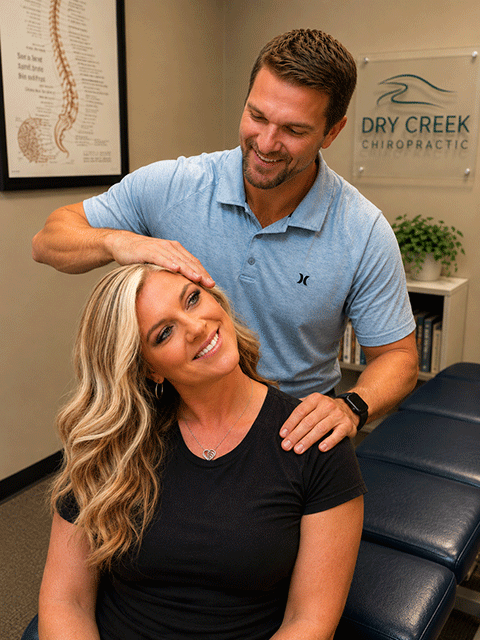
Pediatric chiropractic care focuses on the child’s musculoskeletal system, including the joints, spine, muscles, posture, and movement.
Dr. Walker modifies chiropractic techniques according to the child’s size, age, condition, and comfort. Pediatric care generally uses less force than techniques commonly associated with adult treatment.
Treatment may involve:
- Gentle manual techniques
- Low-force adjustments
- Instrument-assisted techniques when appropriate
- Modified positioning
- Joint-mobility work
- Soft-tissue techniques
- Guidance for movement and posture
- Home exercises
The treatment recommended for a teenager with a sports injury will differ from the approach used for a younger child or infant.
Dr. Walker will explain the proposed care to the parent or guardian before treatment begins.
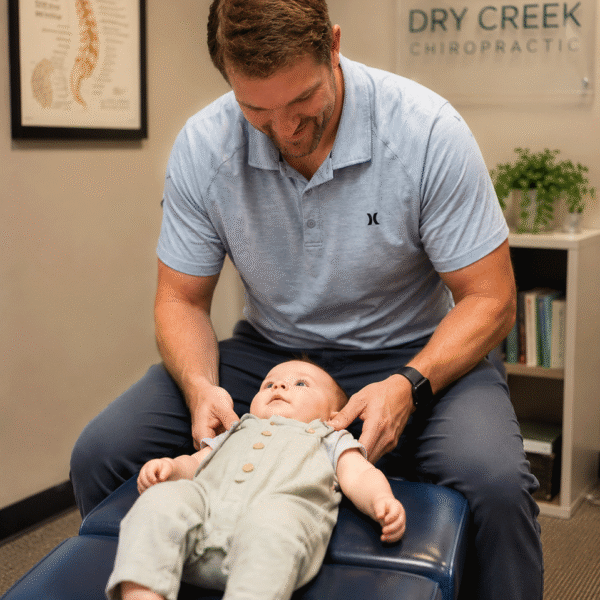
Chiropractic Care for Infants
Infants have different needs from older children and adults. Any examination or treatment must reflect their small size, stage of development, and ability to communicate.
Parents may seek a musculoskeletal evaluation when an infant appears uncomfortable during certain movements, consistently favors one head position, or has experienced physical stress associated with a fall or another incident.
Because infants cannot describe their symptoms, it is important to discuss concerns with the child’s pediatrician and rule out medical conditions when appropriate.
Chiropractic care is not a substitute for pediatric medical care, well-child visits, vaccination guidance, feeding evaluations, or treatment of illness.
Chiropractic Care for Growing Children
As children grow, changes in height, strength, flexibility, and coordination may temporarily affect movement.
A growth spurt may coincide with:
- Muscle tightness
- Reduced flexibility
- Changes in posture
- Clumsiness
- Sports-related strain
- Increased stress on muscles and tendons
- Difficulty adapting to rapid changes in body size
Pain should not automatically be labeled “growing pains.” Persistent, one-sided, swollen, or activity-limiting symptoms should be properly evaluated.
Chiropractic care may be included when the examination identifies musculoskeletal restrictions or movement concerns that are appropriate for conservative treatment.
Physiotherapy for Pediatric Conditions
Physiotherapy may help children improve strength, mobility, flexibility, balance, coordination, and movement control.
A child’s program may include:
- Age-appropriate stretching
- Strengthening exercises
- Core-stability activities
- Balance training
- Coordination exercises
- Posture exercises
- Mobility work
- Sports-specific rehabilitation
- Gradual return-to-activity exercises
- Guidance for safer movement
- Home exercises involving a parent or guardian
Exercises should be practical, engaging, and appropriate for the child’s developmental level.
The goal is not simply to complete a set of exercises in the office. Children and parents should understand how the movements support recovery and how to perform them safely at home.
Physiotherapy for Young Athletes
Young athletes may require rehabilitation after a strain, sprain, repetitive-use problem, or period of reduced activity.
Physiotherapy may focus on:
- Restoring comfortable movement
- Improving strength
- Rebuilding balance
- Developing joint stability
- Improving landing mechanics
- Supporting running or throwing mechanics
- Correcting movement patterns
- Gradually increasing activity
- Reducing the risk of aggravating the same area
Returning to competition should be based on symptoms, strength, function, and medical guidance—not simply the number of days that have passed since the injury.
Massage and Soft-Tissue Care for Older Children
Massage or soft-tissue techniques may be considered for some older children and teenagers with sports-related muscle tension, overuse, or soreness.
Treatment may focus on tight or overworked muscles and can be coordinated with chiropractic care or physiotherapy.
Parental consent is required, and treatment should be modified according to the child’s age, comfort, condition, and preferences.
Massage is not appropriate directly over suspected fractures, acute tears, significant swelling, open wounds, or undiagnosed injuries.
Combining Chiropractic Care and Physiotherapy
Pediatric musculoskeletal concerns may involve more than one contributing factor.
For example, a young athlete with knee discomfort may have:
- Tight leg muscles
- Weak hip stabilizers
- Limited ankle mobility
- Poor landing mechanics
- Restricted joint movement
- A rapid increase in training
A coordinated plan may include:
- Chiropractic care to address appropriate joint restrictions
- Physiotherapy to improve strength and movement control
- Soft-tissue care to address muscular tension when appropriate
- Home exercises to reinforce progress
- Activity modifications to reduce strain during recovery
- Communication with pediatric or sports-medicine providers when additional evaluation is needed
Treatment is individualized rather than based on a standard protocol for every child.
Digital X-Rays and Pediatric Care
Digital X-rays are not automatically needed for pediatric chiropractic care.
Imaging may be considered when the child’s history, symptoms, examination findings, or recent injury suggest that additional information is necessary.
Because children are still developing, imaging should be used only when clinically appropriate. Dr. Walker may instead recommend evaluation by a pediatrician, urgent-care provider, orthopedist, or another specialist.
Helping Children Feel Comfortable
A healthcare visit can feel unfamiliar or intimidating to a child.
Parents can help by:
- Explaining that the doctor will check how the child moves
- Avoiding frightening descriptions
- Encouraging the child to ask questions
- Bringing information about previous injuries
- Letting the office know about sensory needs or anxiety
- Bringing comfort items for younger children
- Staying involved throughout the visit
Nothing should be forced. Children and parents should understand what is being done and have an opportunity to ask questions.
Supporting Healthy Habits at Home
Musculoskeletal health is influenced by what children do outside the office.
Helpful habits may include:
- Regular physical activity
- Appropriate rest and recovery
- Age-appropriate strength and flexibility
- Gradual increases in sports activity
- Regular breaks from screens and homework
- A supportive homework setup
- Properly fitted athletic equipment
- Wearing both backpack straps
- Adequate sleep
- Nutritious meals
- Reporting pain rather than hiding it
- Following rehabilitation recommendations
Parents should avoid encouraging children to play through sharp, worsening, or movement-altering pain.
Returning to School and Sports
The appropriate return to normal activity depends on the nature and severity of the condition.
A gradual progression may involve:
- Restoring comfortable movement.
- Reducing pain and muscle guarding.
- Improving strength and stability.
- Practicing sport-specific movements.
- Returning to modified practice.
- Increasing activity as tolerated.
- Returning to competition when appropriate.
School accommodations may occasionally be helpful, such as temporary limits on physical education, additional time between classes, reduced backpack weight, or breaks from prolonged sitting.
These recommendations should be coordinated with the child’s pediatrician, school, athletic trainer, or specialist when necessary.
Pediatric Chiropractic Care in Lehi and Utah County
Dry Creek Chiropractic provides personalized musculoskeletal care for infants, children, teenagers, and families in Lehi and surrounding Utah County communities.
Our office serves families from:
- Lehi
- Highland
- American Fork
- Alpine
- Cedar Hills
- Saratoga Springs
- Eagle Mountain
- Nearby Utah County communities
Whether your child is experiencing posture-related tension, back pain, neck discomfort, a sports injury, or difficulty returning to normal activities, our team can help determine which conservative treatment options may be appropriate.
Schedule a Pediatric Chiropractic Evaluation
Children should not have to ignore ongoing pain or stop participating in activities without understanding what may be causing the problem.
Dr. Aaron Walker and the Dry Creek Chiropractic team provide age-appropriate evaluations and individualized care for pediatric musculoskeletal conditions.
Your child’s plan may include gentle chiropractic care, physiotherapy, soft-tissue treatment, home exercises, activity recommendations, or referral to another healthcare provider.
Call Dry Creek Chiropractic at (801) 766-4113 or book online to schedule a pediatric chiropractic evaluation.
Dry Creek Chiropractic
Dr. Aaron Walker
3300 North Running Creek Way
Building E, Suite 100
Lehi, UT 84043
FAQ – Pediatric Chiropractic Care
What pediatric conditions can a chiropractor evaluate?
A chiropractor can evaluate musculoskeletal concerns involving a child’s spine, joints, muscles, posture, and movement. These may include back or neck pain, joint stiffness, posture-related tension, sports injuries, minor strains, and discomfort following a fall. Medical conditions and serious injuries require evaluation by an appropriate pediatric healthcare provider.
Are chiropractic techniques modified for children?
Yes. Pediatric chiropractic techniques, positioning, and pressure are modified according to the child’s age, size, development, symptoms, comfort, and examination findings. Dr. Walker will explain the proposed treatment to the parent or guardian before care begins.
Can chiropractic care help a child with a sports injury?
Chiropractic care may be included for certain musculoskeletal sports injuries involving restricted joints, muscle tension, or altered movement. Depending on the injury, treatment may also include physiotherapy, home exercises, activity modifications, imaging, or referral to a pediatric or sports-medicine provider.
How does physiotherapy help children and teenagers?
Physiotherapy may help improve strength, flexibility, balance, coordination, posture, and movement control. Exercises are selected according to the child’s age, condition, abilities, and activity goals.
Does my child need X-rays before receiving chiropractic care?
No. Digital X-rays are not automatically required. Imaging may be recommended when the child’s history, symptoms, injury, or examination findings indicate that additional information is needed.
When should my child see a pediatrician instead of a chiropractor?
A pediatrician or emergency provider should evaluate symptoms involving fever, illness, significant trauma, loss of consciousness, repeated vomiting, severe headache, unexplained weakness, breathing difficulty, obvious deformity, inability to bear weight, or other signs of a potentially serious medical condition.